Empowering a sustainable future with advanced green energy solutions. We help businesses reduce emissions, improve energy efficiency and generate additional revenue through valuable by-products and carbon credits—supporting profitable growth while protecting the planet.
NATIONAL DYNAMICS, in collaboration with an ecosystem of international technology partners & manufacturers, delivers integrated renewable energy and clean thermal-energy solutions for industrial, commercial, utility, agricultural and government applications. Our Renewable & Green Energy Division supports customers in identifying, structuring and implementing the most suitable clean-energy pathway according to their operational needs, available resources, energy-consumption profile, sustainability objectives and financing requirements. The division covers power generation, thermal-energy production, combined heat & power (CHP), waste-heat recovery, energy storage and hybrid energy systems. NATIONAL DYNAMICS provides flexible and scalable solutions that can be deployed as standalone systems or as part of integrated energy transformation programmes.
Our Solutions:
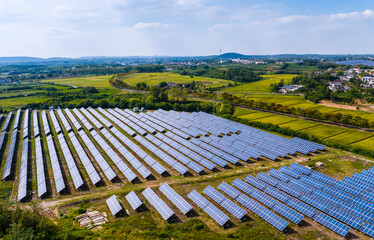
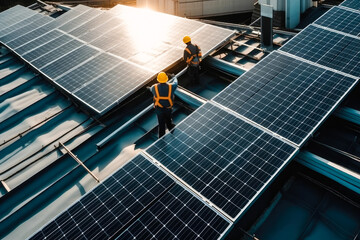
Solar PV Systems represent one of the most practical and widely adopted renewable energy technologies for reducing electricity costs and improving energy independence. We offer Solar PV solutions that can be adapted to a wide range of applications, including commercial buildings, factories, logistics facilities, farms, public infrastructure, remote sites and utility-scale developments. Each Solar PV project is designed according to the customer’s electricity demand, available installation area, grid conditions, operating hours and long-term energy objectives. The systems can be configured for self-consumption, grid export, hybrid operation or integration with storage and backup power systems.
Our solutions cover the complete project lifecycle, from site assessment and system design to equipment supply, installation, commissioning and technical support. High-quality solar modules, inverters and mounting systems are selected to ensure reliable performance, operational safety and long-term durability. Advanced monitoring platforms provide real-time visibility of energy generation, consumption and overall system efficiency. By combining Solar PV with battery storage and intelligent energy-management technologies, customers can further enhance energy resilience, optimise consumption and reduce dependence on conventional power sources.
Distinctive Features / Main Points
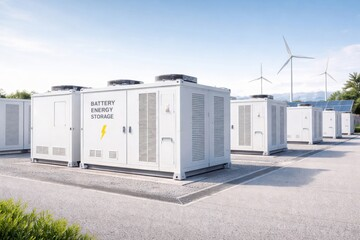
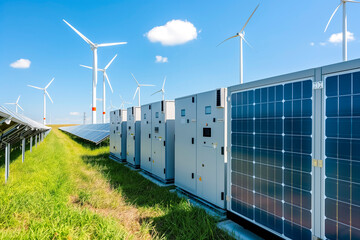
Battery Energy Storage Systems (BESS) are a key enabler of modern renewable energy projects, allowing generated electricity to be stored and used when needed. BESS solutions help customers manage intermittency, improve power reliability and optimise the use of renewable energy assets. We provide BESS solutions for grid-connected, off-grid and hybrid applications. These systems can be used for backup power, peak-demand reduction, renewable-energy smoothing, microgrid operation and improved power quality.
By integrating storage with Solar PV, Wind, CHP or other power-generation assets, customers can achieve greater control over their energy usage and improve the resilience of their operations. Each system is designed according to the required storage capacity, discharge duration, load profile, operating environment and long-term energy objectives. Advanced energy-management and monitoring platforms enable real-time control, performance optimisation and efficient coordination with generation assets and the electricity grid. BESS can also reduce reliance on diesel generators, minimise demand charges and support uninterrupted operation during grid disturbances or outages. Through scalable and modular configurations, storage capacity can be expanded as future energy requirements evolve.
Distinctive Features / Main Points
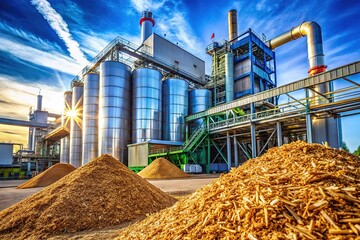

Biomass Gasification Combined Heat & Power (CHP) Systems are suitable for facilities that require both electricity and thermal energy as part of their daily operations. Through an integrated system configuration, biomass gasification can support power generation while simultaneously supplying useful heat or steam for industrial processes. This approach is especially valuable for factories and agro-industrial operations where electricity reliability and process heat are both critical. CHP configurations can help reduce exposure to grid instability, diesel-generator dependency and high energy costs, while supporting broader decarbonisation and sustainability objectives.
NATIONAL DYNAMICS can structure CHP solutions according to the required power capacity, steam demand, biomass availability, operating profile and long-term expansion requirements. The systems can utilise locally available biomass residues, transforming underused materials into reliable and productive energy resources. High overall energy efficiency can be achieved by recovering heat from the power-generation process and redirecting it to factory operations. The production of biochar may also create additional value through commercial applications and eligible carbon-credit revenues.
Distinctive Features / Main Points